The Day I Wanted the Earth to Swallow Me Whole
On the spectrum between extroversion and introversion, I find myself much closer to the introverted side. It’s not that I dislike people; rather, I energize by having my own space to quietly think alone, where calm and comfort help me recharge. A friend once joked that introverts make the funniest language mistakes, especially in a second language, simply because they don’t talk enough.
So, there I was, on the first day of class, a TA for whom English is a second language, standing in front of thirty first-year students to teach my very first tutorial for Math 1215, “Life Sciences Calculus.”
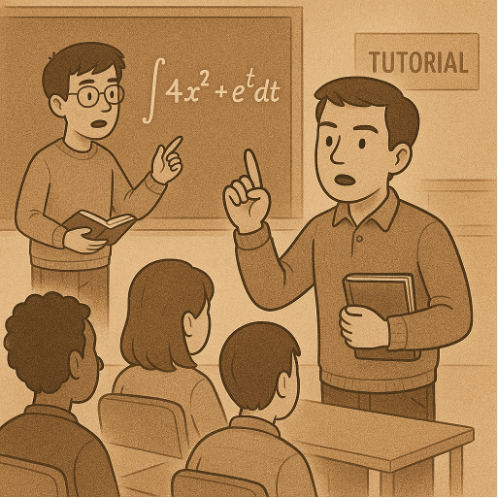
The First Class: Or, The Cold-Sweat Incident
There is a tradition in our department and the teaching group of the first-year calculus course that new instructors and TAs are observed by senior graduate students. They attend your class, take notes, and later, give you feedback. During my very first tutorial, everything seemed to be going smoothly; students were quiet, I was explaining a problem, and confidence was slowly finding its way into my voice.
Then I noticed the observing graduate student shifting in his seat, looking around, glancing at students. Adjusting his posture. And then, his hand went up.
He gently pointed out a mistake on the board.
You know, it’s the worst that could have happened. I didn’t notice the mistake, the students didn’t notice either. It was someone else—a guest. What could have been worse?! But I stayed confident, felt how great teaching is, and since then I have became an awesome TA.
Well, I wish it were like that. After the observer noted the mistake, I continued teaching. Or at least, I think I did. In reality, I do not remember a single sentence I said after that moment. All I remember is the cold sweat—the kind where your brain starts whispering, “You should probably disappear into the floor now.” But that would not have been disappeared enough; I wanted the earth to swallow me whole.
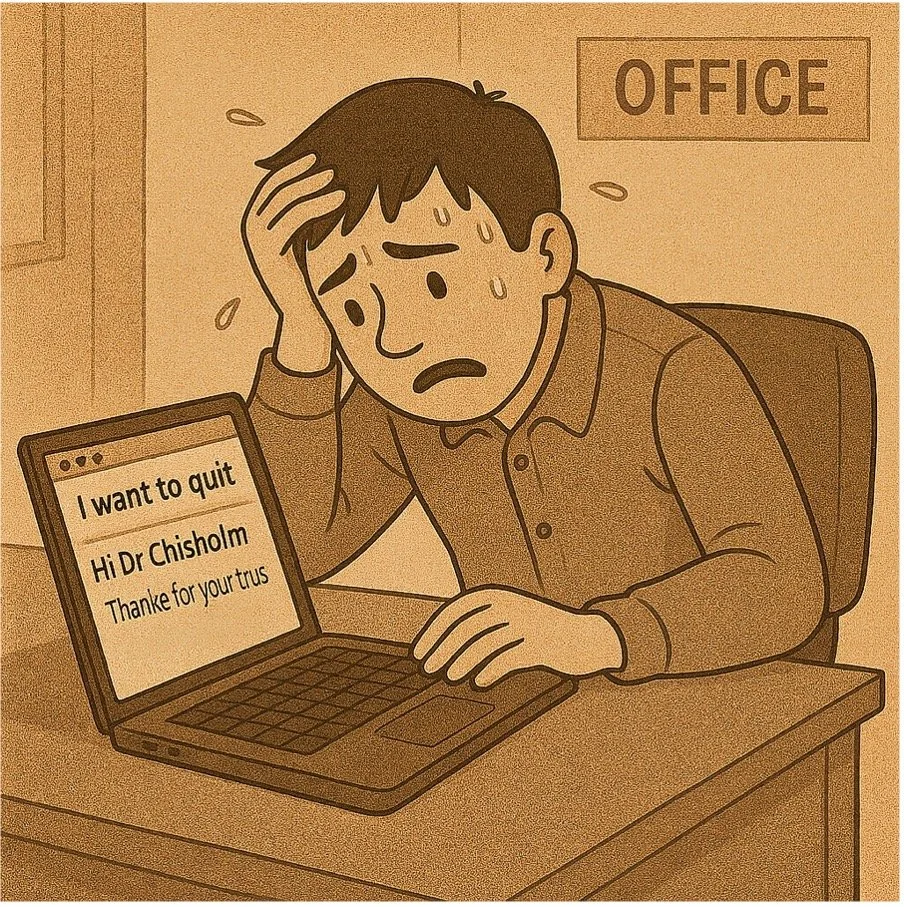
When the class ended, I didn’t walk back to my office—I ran. I opened my laptop and wrote an email to my teaching supervisor:
“Hi Dr. Chisholm,
Thank you for your trust in me. I think I’ve made a very bad mistake. Maybe I’m not ready for this. I would like to step back and try again next semester.
Best,
Arvin”
I closed my laptop, and for the rest of the day I did nothing but lie down and recover. The next day, I read her response. She reassured me that mistakes are part of the learning process and encouraged me to speak with the graduate student who had observed the class. When I talked to him, he told me the class had actually gone well overall, and that the mistake I made was not nearly as catastrophic as it felt in the moment. He did not let me walk away.
It took a couple of days before I could finally see it clearly: what felt overwhelming to me was barely noticeable to others. And the support, understanding, and encouragement I received from my supervisor meant a lot to me. I decided to continue, and I was encouraged to get better. It was the starting point of my teaching journey.
But where to go from here? Looking back on my own education, I thought about how, and with what kind of teachers, I learnt best. I decided to be the teacher I always wanted to have, a teacher who could inspire, and who one could truly learn from. So, I accepted the challenge of teaching well, and decided to approach it like research: try to get better over time by paying attention to mistakes, reflecting on them, and carrying on. I owe all of this courage to my teaching supervisor; because of all her support, I was able to accept the challenge.
In the process of improving my teaching skills, I realized what I didn’t want to happen in my class. Some academics seem ready to take markers out of their pockets and start explaining things, and if they don’t find anyone, they’ll talk to trees—maybe that’s the reason they have quiet classes! I learned that good teaching isn’t all about having lots of knowledge—it’s about building a relationship with students.
This was my first hurdle. As someone coming from a different educational culture, I noticed some things in my classes that, to me, seemed odd. For example, students would begin eating as soon as I started teaching. I felt like had invited them to a party, rather than a lecture. In my home culture, the professor holds a very respected position, and students do not speak while the instructor is speaking. No one eats during class. Everyone sits properly, quietly, and attentively.
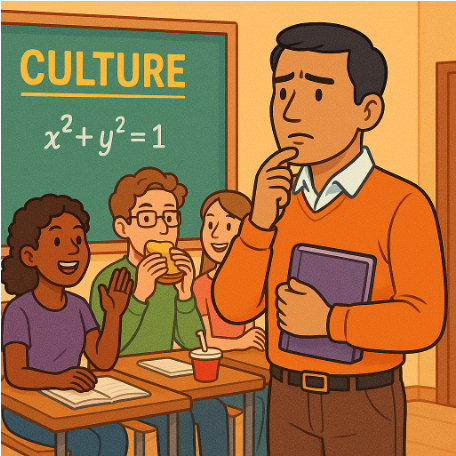
But, I noticed that those who talk, felt comfortable enough to eat, or are otherwise not “proper” during my lecture, were the ones who answered my questions first, and created a positive momentum. That’s an asset to my class, especially since the core of my teaching strategy is asking questions (lots of questions)! I realize I needed to learn the classroom culture here. It might be different from what I am used to, but it was an advantage to my teaching.
It's worth the challenge!
When I first started teaching at Dalhousie, I didn’t expect it to change me as much as it did. Teaching still exhausts me. After I finish a class, I rarely have energy for anything else. But the moment a student’s eyes light up, or I hear a quiet, “ohhh, now that makes sense,” or, a student smiles because they truly understand something—there is nothing more rewarding. We have wonderful, kind, and curious students at Dalhousie, and I would like to invite you to explore their kindness. They deserve the best, and I try, in each of my classes, to provide them with the best I can offer.
I would like to close with a suggestion that you surround yourself with a positive group of friends that can give you constructive feedback, so that they can help you by giving you positive comments, but also reminding you of your capabilities, and the fact that you can be the best version of yourself.
Author bio: Arvin Vaziry is a PhD candidate in Mathematics at Dalhousie University, where he teaches and conducts research in applied Math. Over the past few years, he has had the opportunity to teach and coordinate first-year calculus courses, experiences that have deeply shaped his understanding of learning and communication.